
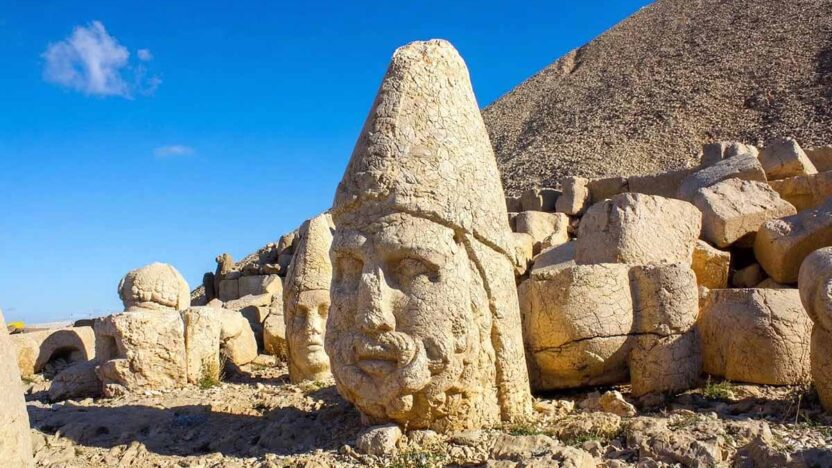
Rising above the rugged landscapes of southeastern Turkey, Mount Nemrut (Nemrut Dağı) stands as one of the most remarkable archaeological sites in the world. Famous for its mysterious giant stone heads and dramatic mountain scenery, this UNESCO World Heritage site offers travelers a unique opportunity to experience ancient history surrounded by breathtaking natural beauty.
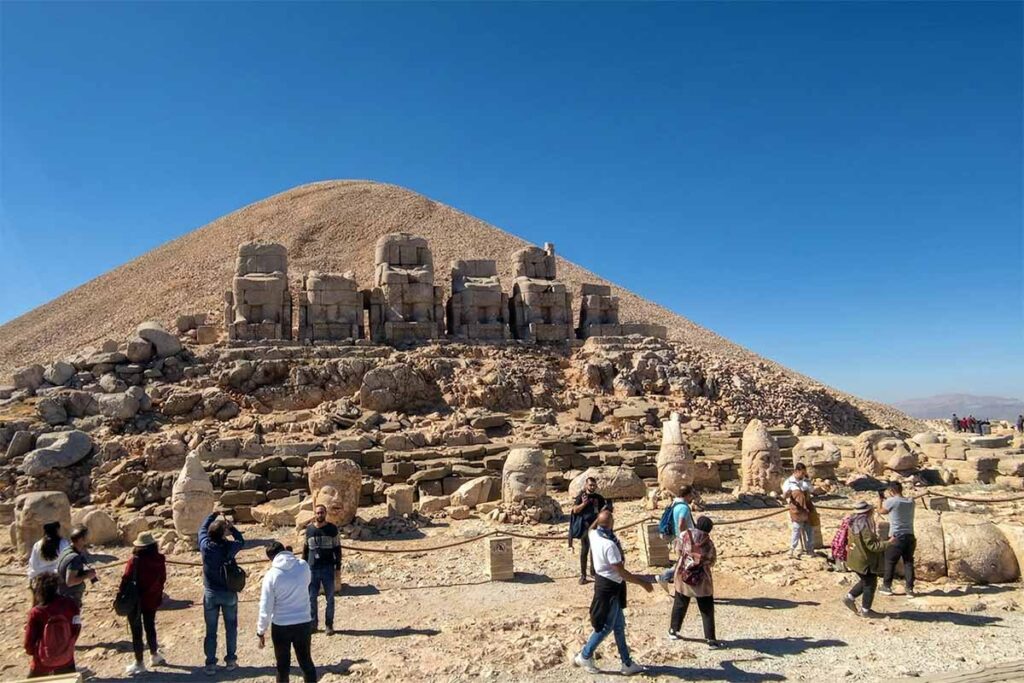
Constructed in the 1st century BC by King Antiochus I of the Commagene Kingdom, the summit of Mount Nemrut was designed as a monumental sanctuary and royal tomb. The colossal statues of gods, lions, and eagles that once formed part of this ceremonial complex symbolize the fascinating fusion of Greek and Persian cultures that shaped this ancient kingdom.
Today, visitors from around the world climb to the terraces of Mount Nemrut to witness one of Turkey’s most unforgettable experiences: watching the sunrise or sunset among the ancient stone gods. As the first rays of sunlight illuminate the statues and the surrounding mountains, the atmosphere becomes both mystical and awe-inspiring, making Mount Nemrut a true highlight of any journey through eastern Turkey.
Where is Mount Nemrut Located?
Mount Nemrut (Nemrut Dağı) is located in southeastern Turkey, within the borders of Adıyaman Province, in the Eastern Taurus mountain range. Rising to an elevation of approximately 2,134 meters (7,001 feet), the mountain forms part of the Nemrut Dağı National Park, a protected UNESCO World Heritage site known for its remarkable archaeological remains and dramatic mountain landscapes.
The nearest town to Mount Nemrut is Kahta, which serves as the main gateway for visitors traveling to the summit. From here, travelers can easily reach the mountain by car or as part of a guided tour. Many visitors also travel to Mount Nemrut from nearby regional hubs such as Adıyaman, Malatya, Gaziantep, and Şanlıurfa, often combining the visit with other historical destinations in southeastern Turkey.
Because of its remote yet spectacular location, Mount Nemrut is frequently included in Eastern Turkey cultural itineraries, connecting iconic sites such as Göbeklitepe, Şanlıurfa, and the ancient landscapes of Commagene Kingdom heritage.
Why Visit Mount Nemrut?
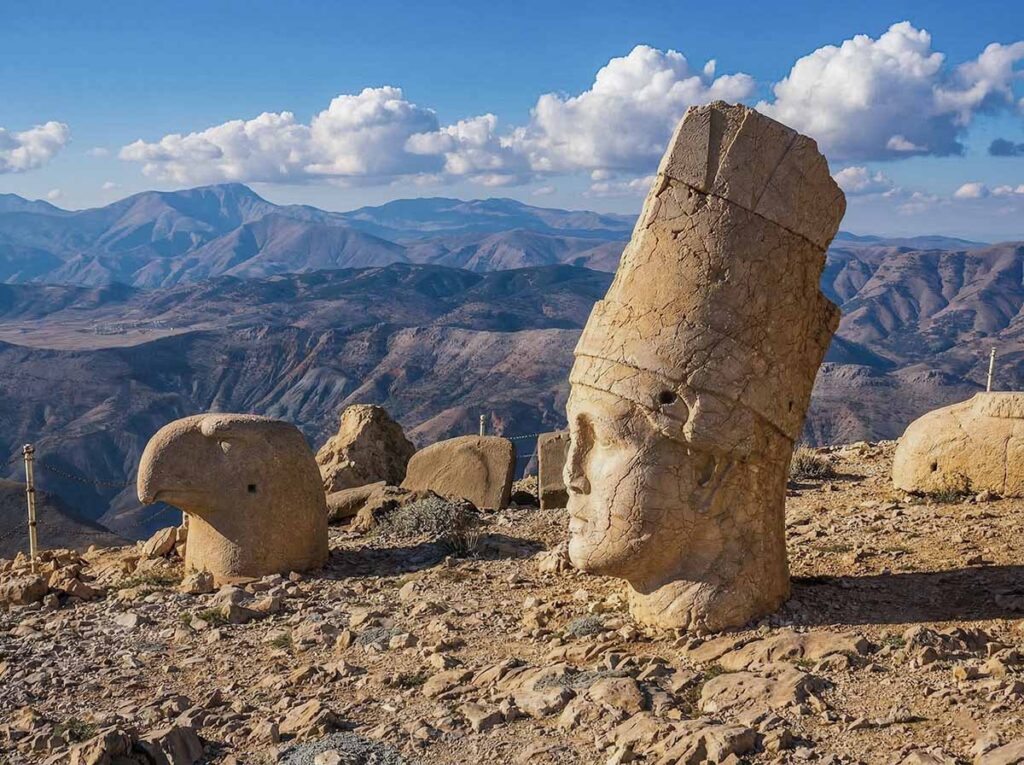
Mount Nemrut is not just an archaeological site; it is one of the most extraordinary historical landscapes in the world. At the summit, colossal statues of ancient gods, lions, and eagles surround a mysterious burial mound built more than two thousand years ago by the Commagene Kingdom. The scale of these monuments and their dramatic mountaintop setting create a unique atmosphere that fascinates historians, photographers, and travelers alike.
What makes Mount Nemrut truly unforgettable is the experience of watching the sunrise or sunset among the giant stone heads. As the first rays of sunlight slowly illuminate the statues and the surrounding mountains, the entire site transforms into a breathtaking scene where ancient history and nature meet in perfect harmony.
For travelers exploring southeastern Turkey, Mount Nemrut is often considered one of the highlights of the region. Many visitors combine the experience with nearby cultural destinations such as Şanlıurfa, Göbeklitepe, and Gaziantep, creating a remarkable journey through one of the most historically rich areas of Turkey.
How to Visit Mount Nemrut?
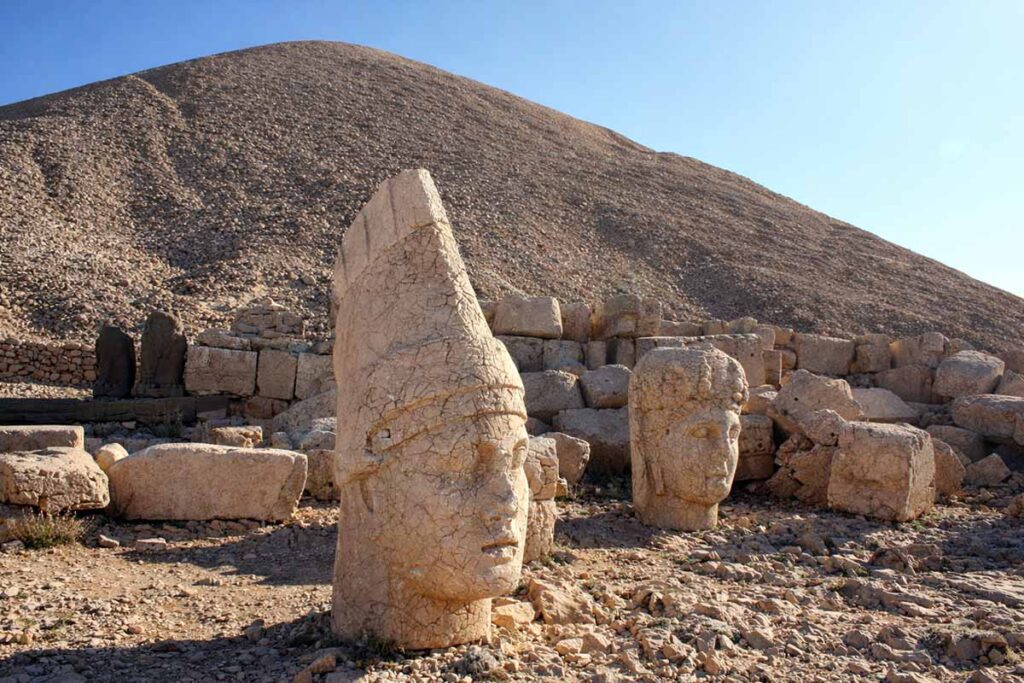
Reaching Mount Nemrut requires some planning, as the mountain lies in a remote part of southeastern Turkey within the Eastern Taurus range. Most travelers begin their journey from nearby cities such as Şanlıurfa, Gaziantep, Adıyaman, or Malatya, which serve as the main gateways to the national park. From these cities, the road gradually climbs toward the mountain before visitors complete the final part of the journey with a short but steep walk to the summit terraces.
Because of the mountain’s location and the early departure times required for sunrise or sunset visits, many travelers prefer to join a guided Mount Nemrut tour rather than organizing the trip independently. Guided tours provide transportation, a structured itinerary, and the opportunity to explore other important historical sites of the Commagene Kingdom, such as Arsameia Ancient City, Cendere Bridge, and Karakuş Tumulus, which are located along the scenic route to the mountain.
For visitors exploring southeastern Turkey, Şanlıurfa and Gaziantep are among the most convenient starting points for Nemrut tours. From Şanlıurfa, travelers can join a sunset Mount Nemrut private tour, often combined with nearby cultural highlights of the region. Another popular option is traveling from Gaziantep, where private day tours allow visitors to experience the dramatic landscapes and ancient monuments of the Commagene Kingdom before reaching the summit terraces of Mount Nemrut.
Travelers who want to explore more of the region’s ancient history may also choose a multi-day journey combining Göbeklitepe and Mount Nemrut. This route connects two of Turkey’s most fascinating archaeological destinations and offers a deeper look into the early civilizations of Anatolia.
The best time to visit Mount Nemrut is between May and October, when the weather conditions are favorable and the mountain roads are open. During these months, travelers can comfortably reach the summit terraces and enjoy the breathtaking views of the surrounding Taurus Mountains. In winter, heavy snow often blocks access to the mountain, making visits difficult or impossible from late November through early spring.
Best Time to Visit Mount Nemrut
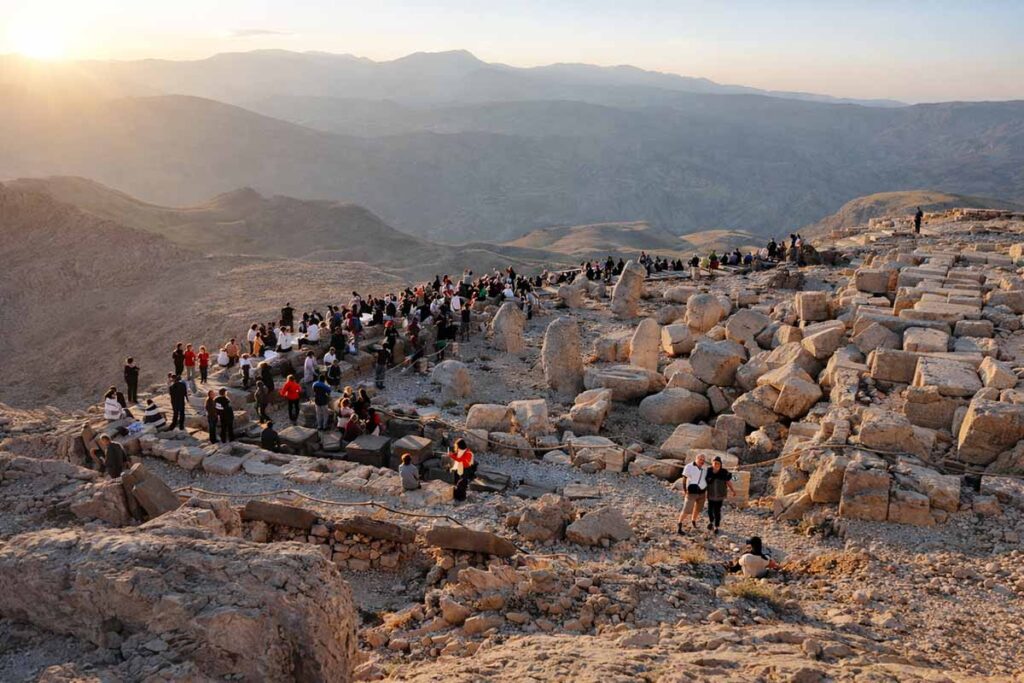
Among all experiences on the mountain, sunrise and sunset are considered the most spectacular moments to visit Mount Nemrut. At dawn, the first rays of sunlight illuminate the colossal stone statues on the East Terrace, creating a magical atmosphere that photographers and travelers from around the world come to witness. Sunset offers a similarly dramatic experience on the West Terrace, when the warm colors of the setting sun slowly paint the ancient stone gods and the vast Anatolian landscape.
For many visitors traveling through Şanlıurfa, Gaziantep, or southeastern Turkey, sunset tours are particularly popular because they allow travelers to explore nearby historical sites during the day before reaching Mount Nemrut in time for the unforgettable sunset view. Whether at sunrise or sunset, visiting Mount Nemrut is widely considered one of the most extraordinary travel experiences in Turkey.
Mount Nemrut Tours from Şanlıurfa and Gaziantep
Visiting Mount Nemrut is one of the most memorable travel experiences in southeastern Turkey. Because of the mountain’s remote location and the timing required for sunrise or sunset visits, many travelers prefer joining a guided tour that includes transportation and carefully planned stops at the region’s most important historical sites.
Travelers staying in Şanlıurfa can experience the magical atmosphere of Nemrut during sunset with the
Mount Nemrut Sunset Private Tour from Şanlıurfa, a popular option that allows visitors to explore the scenic landscapes and ancient monuments of the Commagene Kingdom before reaching the summit terraces.
Another excellent option is the
Mount Nemrut Private Day Tour from Gaziantep, ideal for travelers who want to discover the dramatic landscapes and historical heritage surrounding Mount Nemrut while traveling comfortably from Gaziantep.
For visitors who want a deeper journey into the history of southeastern Anatolia, the
Göbeklitepe & Mount Nemrut 2-Day Private Tour combines two of Turkey’s most fascinating archaeological destinations into a single unforgettable experience.
Frequently Asked Questions About Mount Nemrut
Where is Mount Nemrut located?
Mount Nemrut is located in southeastern Turkey, within Adıyaman Province in the Eastern Taurus mountain range. Rising to an elevation of about 2,134 meters, the mountain is part of Nemrut Dağı National Park, a UNESCO World Heritage site famous for its giant stone statues and ancient Commagene Kingdom heritage.
Why is Mount Nemrut famous?
Mount Nemrut is famous for its colossal stone statues of ancient gods, built by King Antiochus I of the Commagene Kingdom in the 1st century BC. The statues surround a mysterious royal burial mound and represent a unique blend of Greek and Persian mythology, making the site one of Turkey’s most remarkable archaeological landmarks.
How do you get to Mount Nemrut?
Most travelers reach Mount Nemrut from nearby cities such as Şanlıurfa, Gaziantep, Adıyaman, or Malatya. Visitors typically drive or join a guided Mount Nemrut tour that includes transportation and stops at nearby historical sites like Arsameia, Cendere Bridge, and Karakuş Tumulus before walking to the summit terraces.
Is Mount Nemrut better at sunrise or sunset?
Both sunrise and sunset offer spectacular views at Mount Nemrut. Sunrise is considered the most iconic moment, when the first light illuminates the giant statues on the East Terrace. Sunset, however, is often warmer and less crowded, providing equally dramatic views over the mountains and ancient stone heads.
When is the best time to visit Mount Nemrut?
The best time to visit Mount Nemrut is between May and October, when the weather conditions are favorable and the mountain roads are open. During winter months, heavy snow can block access to the summit, making travel difficult between late November and early spring.
Is Mount Nemrut worth visiting?
Yes, Mount Nemrut is widely considered one of the most extraordinary historical sites in Turkey. The combination of ancient statues, dramatic mountain scenery, and the unforgettable sunrise or sunset experience makes it a must-see destination for travelers exploring southeastern Turkey.
How long does it take to reach the summit?
From the parking area near the summit, visitors usually walk about 20 to 30 minutes to reach the terraces. The path is steep but paved, and most travelers can complete the walk comfortably with short breaks while enjoying the surrounding mountain views.
What else can you see near Mount Nemrut?
Near Mount Nemrut, visitors can explore several important Commagene Kingdom sites, including Arsameia Ancient City, Cendere Bridge, and Karakuş Tumulus. Many travelers also combine their trip with Göbeklitepe, Şanlıurfa, or Gaziantep, creating a rich cultural journey through southeastern Turkey.


